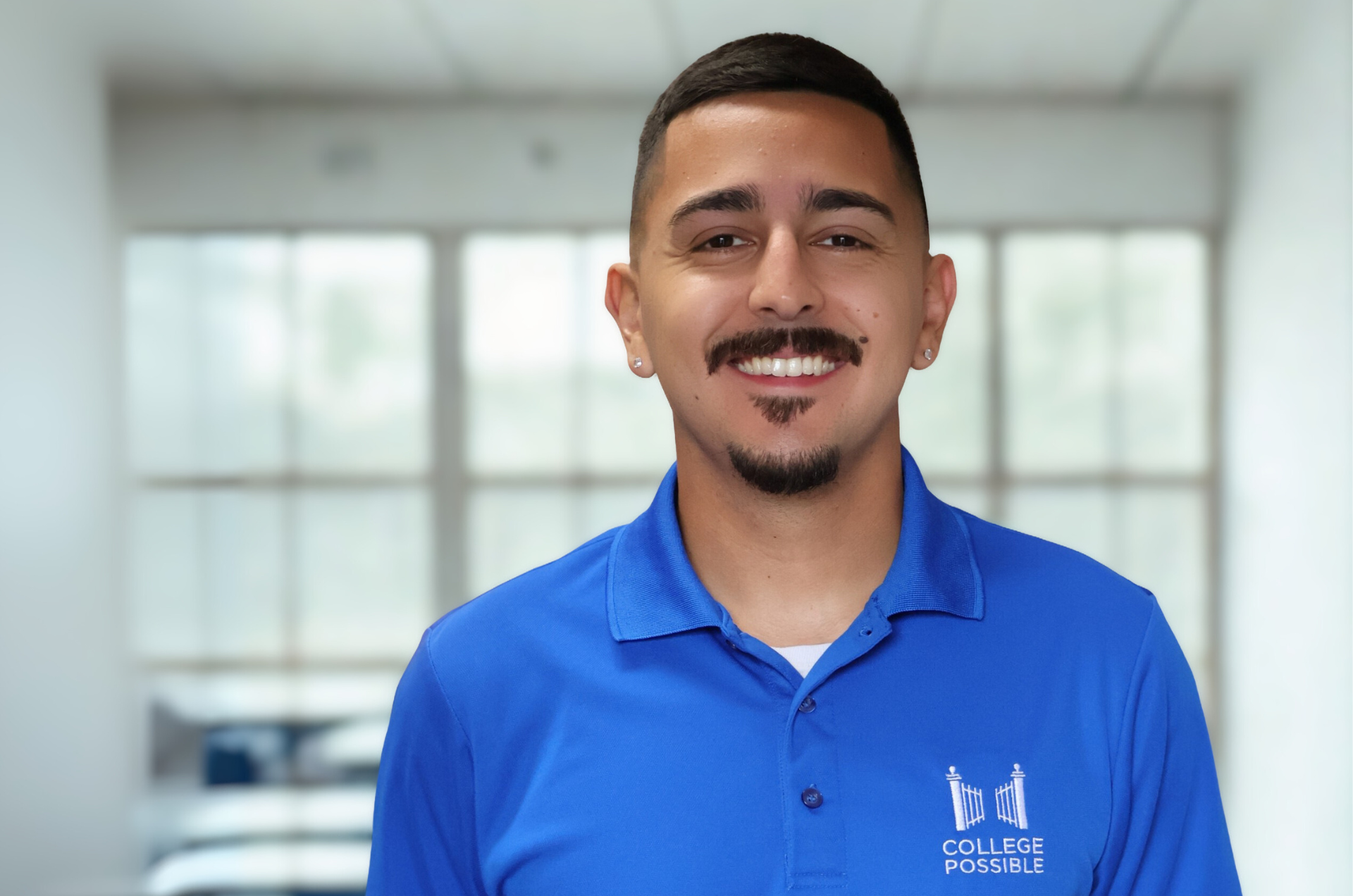

As part of the ongoing celebration of our 25th anniversary, we spoke with Ali Ayub, senior vice president of finance, technology and data, about why he joined College Possible, his efforts to improve technology across this nonprofit organization, and the development of Coach Possible, a key milestone in College Possible’s evolution that reinforces our commitment to student success.
What inspired you to join College Possible?
I’ve been an IT and a product development professional for 30 years, working across a range of industries including technology and financial services. I spent five years with the International Baccalaureate, a mission-driven organization developing education solutions that impact students around the world. That experience reinforced my passion for organizations dedicated to helping students succeed, which ultimately led me to join College Possible in 2023. I believe everyone deserves access to a high-quality education, and students sometimes need extra support to overcome the most challenging parts of their educational journey.
Your biggest contribution so far has been developing Coach Possible, correct?
Yes. College Possible has 25 years’ worth of data stored in Salesforce, but until recently, we didn’t have tools to leverage it fully. Prior to federal AmeriCorps funds being cut, we were already testing Coach Possible, which allowed us to deploy it quickly, enabling coaches to manage more student cases without compromising the quality of service. That led us to develop the AI-powered application Coach Possible in just six months.
What does AI allow us to do that we couldn’t do before?
The most valuable aspect of AI is the size and amount of data that you have, and we had 25 years’ worth. AI helped us see the different pathways students took to get to college, identify what students are doing to be successful, and provide early warning systems when a student’s grades begin to slip or they run into trouble. The AI enabled us to understand all the data we had collected over the years, so we could provide better pathways for students and better insights for coaches. AI powers Coach Possible, which helps our coaches build relationships with students instead of spending their time digging through records, managing deadlines, and other administrative tasks.
AI enabled us to create a virtual coach that can give students the answers they’re looking for, whenever they need information, without having to wait. And when students and coaches text and call each other in the application, AI is transcribing that conversation in real time, which allows coaches to pull up relevant data so they can help students. It also adds that to the database, which means the next student and coach facing the same situation will get better answers even faster.
What other technology initiatives have you been involved with since you’ve been at College Possible?
We’ve transformed how College Possible manages and understands data. What once lived in scattered spreadsheets is now part of a cohesive, reliable system. Spreadsheets can be useful tools for information storing and analyzing, but they were never meant to be a cohesive guidebook.
This change has been about more than technology. We’ve partnered across the organization to help staff see their data in new ways, understand what it means, and use it to strengthen student support and satisfaction.
We’ve also automated many of our reports so that information flows where it is needed, when it is needed. The goal is not to produce more reports, but to spark better decisions based on timely, accurate insights.
Behind the scenes, we have made a major leap forward in efficiency by moving our data from local hardware to secure, cloud-based systems within Salesforce and Microsoft 365. This shift makes collaboration easier, keeps our data safer, and sets us up for smarter growth in the years ahead.
We’ve talked a lot about tech. Where do people fit in?
My work is about keeping the right balance between people, processes, and technology. You can have amazing people and powerful tools, but if the processes aren’t solid, nothing works. All three have to come together.
At College Possible, the people are our students and coaches. Our process is how we manage those relationships and workflows, and the technology, like our enhanced Salesforce system with AI, helps everyone do their best work.
After 30 years in IT, I’ve learned one big lesson: technology alone doesn’t drive change. You don’t start by talking about tools because that can confuse or intimidate people—they’re not data scientists. You start by understanding their work, their challenges, and how to make it easier. Then you use technology to support them. That’s what I’ve been doing at College Possible: helping people do their jobs better so they can focus on supporting students.
What does the future hold?
When I think of the future, I’m not thinking about the next tool or dashboard, I’m focused on how we can support a population of students that want to pursue a higher education. With Coach Possible, our 25 years of data becomes a living memoir that anticipates needs: a nudge before deadlines, real answers in the middle of the night, and a coach waiting with a plan when students need it. Our goal isn’t to replace people; it’s to give them back time for relationships. If we stay focused, fewer students will slip through the cracks, and more will hear “you belong here,” exactly when they need it.
More about Ali Ayub
Ali Ayub is College Possible’s senior vice president of finance, technology and data, where he is leading College Possible’s shift to the Salesforce-based Coach Possible platform during a period of significant organizational change. Before joining College Possible, Ayub served as chief digital officer at International Baccalaureate where he led the organization’s digital transformation and extended its global education solutions and services to more than 6,000 international schools and 1 million students worldwide. Previously, he held information technology leadership roles with IBM, Caliber Home Loans, and Softlayer.