
Finding a career path isn’t usually straightforward, it hinges on balancing academic strengths with real world experiences, and exploring fields that can be outside your initial interests. According to a recent survey of young adults ages 18-30, “Nearly two-thirds are unsure about their future career path, and one in four are struggling to break into the field they thought they’d pursue after graduation.” There’s also a desire to find balance between financial stability and finding fulfillment and mentorship in a workplace environment. “Gap years” can serve as the perfect landing spot for those unsure of next steps, and are not uncommon. In fact, nearly 50 percent of prospective College Possible coaches say they chose an AmeriCorps year of service to help them identify their path.
“AmeriCorps service led to me finding my career path. I was able to help with AmeriCorps recruitment, which led to falling in love with human resources,” says Lindsey, a college access coach. Let’s unpack the benefits of national service and why recent college grads choose to take a gap year at College Possible.
What is an AmeriCorps Service Year at College Possible
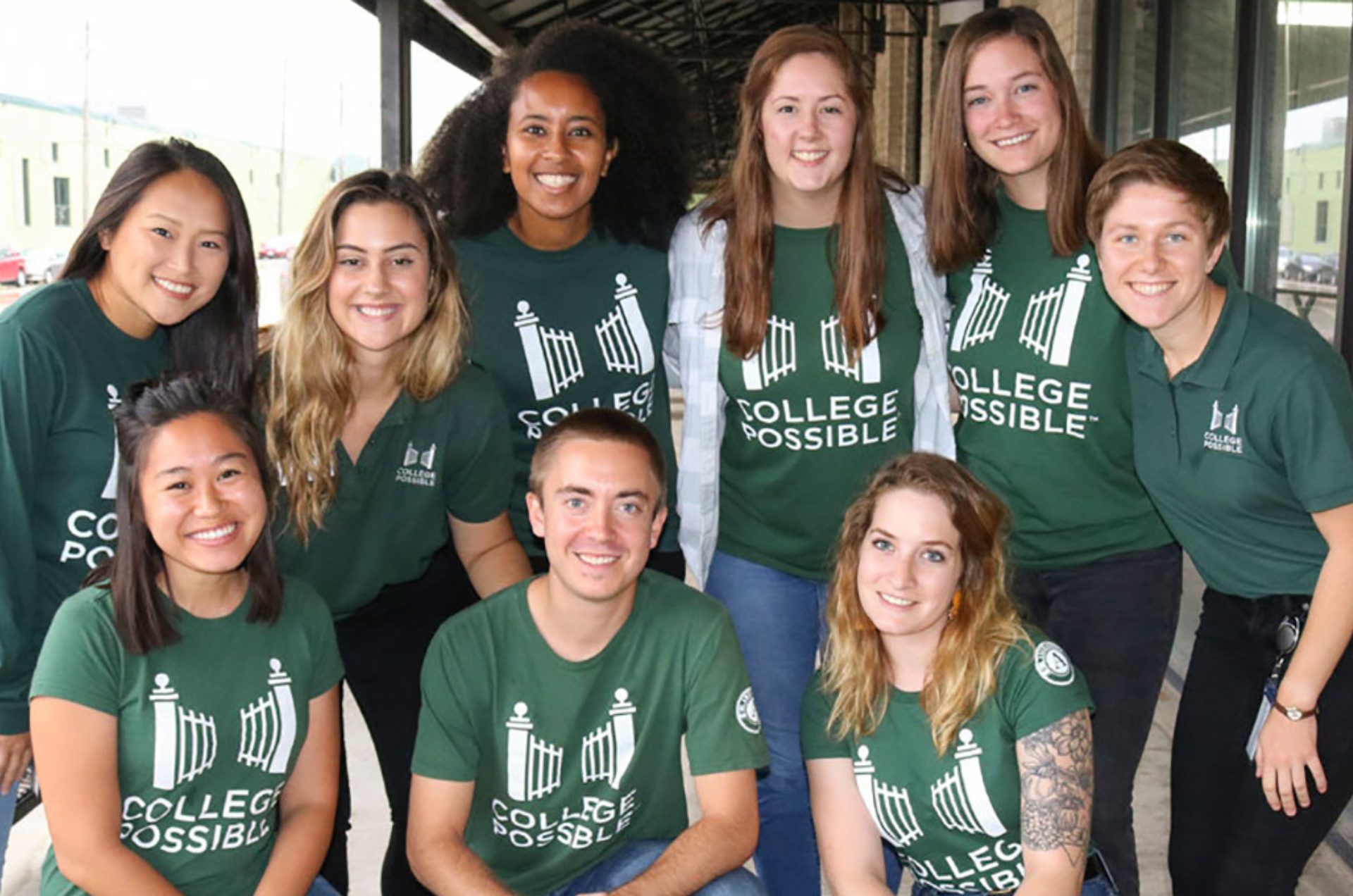
Each year, more than 200,000 AmeriCorps service members pledge a year of service at nonprofit organizations across the country. AmeriCorps members with College Possible play an essential role as college access coaches or college success coaches, supporting high school and college students across the country in pursuing their college degrees. Coaches typically commit to full-time service roles in either Chicago, Minnesota or Texas, or at a Catalyze college campus. Full-time roles require a time commitment of 1,700 service hours from August to June or July, coming out to about 40 hours per week. Some part-time service roles are also available.
College access coaches work with an assigned cohort of students at various partner high schools in their site region. Coaching support runs Monday through Thursday and may include in-person support, tech-connected support, or both. During a typical school week, AmeriCorps coaches manage day-to-day interactions with students and hold group sessions for juniors or seniors. Time with students is spent helping them navigate key college admissions milestones: college selection, test prep, applications, and financial aid.
College success coaches support a cohort of college students to stay on track through degree completion—typically with students spanning multiple universities and colleges if serving in Chicago, Minnesota or Texas. Catalyze coaches serve students specific to the university they are assigned. In this role, AmeriCorps coaches help students navigate common college obstacles by helping them find study groups, directing them to campus and community resources, and strengthening their time-management and budgeting skills.
Pros of Pursuing a Gap Year after College Graduation
Many recent college graduates across the United States are turning to volunteer service with AmeriCorps. Gap year programs like ones offered by College Possible AmeriCorps are an excellent way to channel your passion and find a career path that is best suited for you.
A successful gap year at College Possible also offers resume-boosting experience, often far exceeding that of entry-level positions in other organizations. AmeriCorps coaches learn Salesforce data management; conflict resolution skills; event budgeting, planning and production, work with generative AI and expand their communication skills, all in one year!
“Being a College Possible coach is something I never imagined myself doing after graduating from college,” says Edith, a college access coach. “Today, I wouldn’t want to be at any other place in my professional life than where I am right now.”
The tangible work experience gained during a College Possible AmeriCorps service year is easily transferable into any career, and the professional and personal skills needed to lead a student cohort are sought after by hiring managers across the country.
“My AmeriCorps service experience prepared me for graduate school and my career as a public health professional by allowing me to work with such a wide variety of people,” says Erin, a former college access coach. “Learning to work closely with folks who have varying personalities, communication styles, goals, skills, backgrounds, and experiences is such a valuable skill for any career.”
Additional Benefits of an AmeriCorps Service Year
In addition to the experiential learning offered during an AmeriCorps service year, a gap year can be monetarily beneficial for recent college graduates. When you commit to a year of service as a College Possible AmeriCorps coach, not only will your qualifying student loan payments be deferred during your time of service, you’ll also be earning hours toward a Segal AmeriCorps Education Award—an award that is enough to pay an average year’s worth of loan payments.
Unlike other gap year experiences, College Possible AmeriCorps coaches receive free, full-coverage medical, vision and dental insurance during their term of service. Coaches also have approximately four weeks of scheduled time off.
AmeriCorps coaches earn compensation in the form of an annual living allowance, paid as a biweekly living stipend. This can be used for anything, although many coaches use their stipends for rent, groceries and entertainment. In addition to a living stipend, some service sites offer additional benefits such as a transportation pass, while some Catalyze campus sites may offer free or affordable housing options, rec center access, parking passes or even a meal plan.
With benefits like complimentary health insurance coverage and the money coaches save on student loan deferments and interest, a gap year of service with College Possible AmeriCorps is both an excellent avenue to gain valuable experience and a money-smart decision for recent college grads.