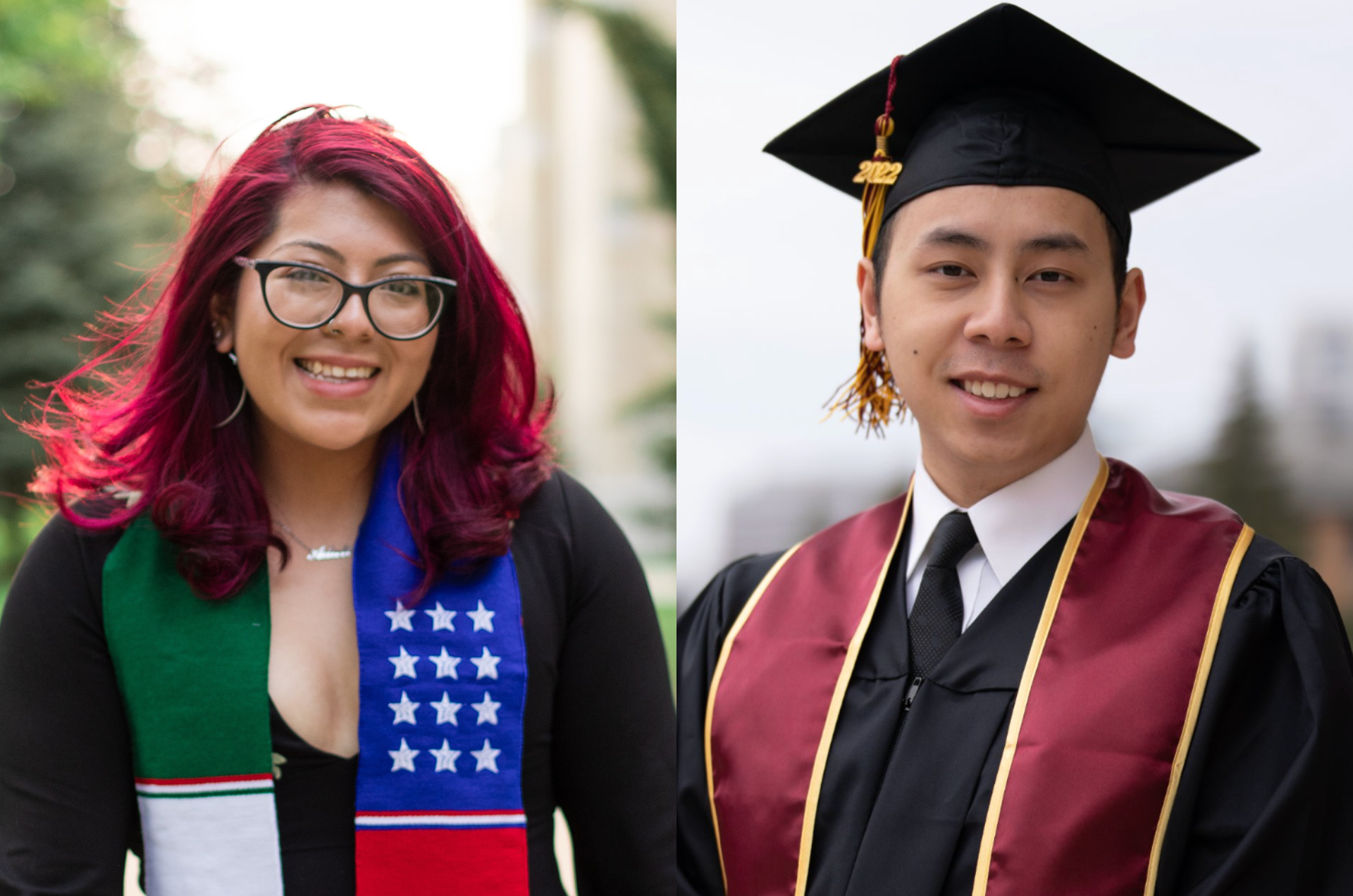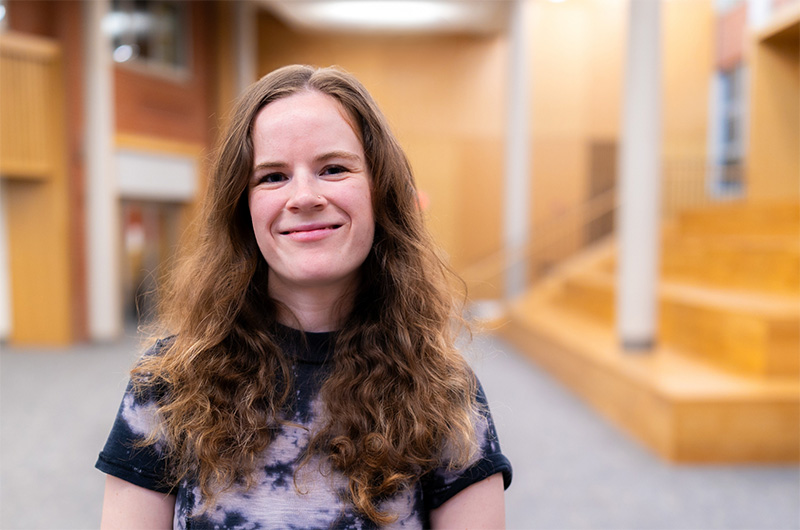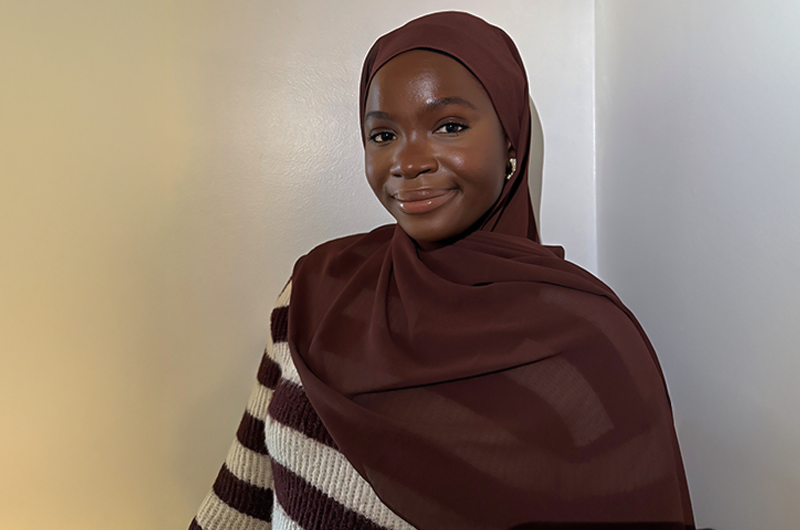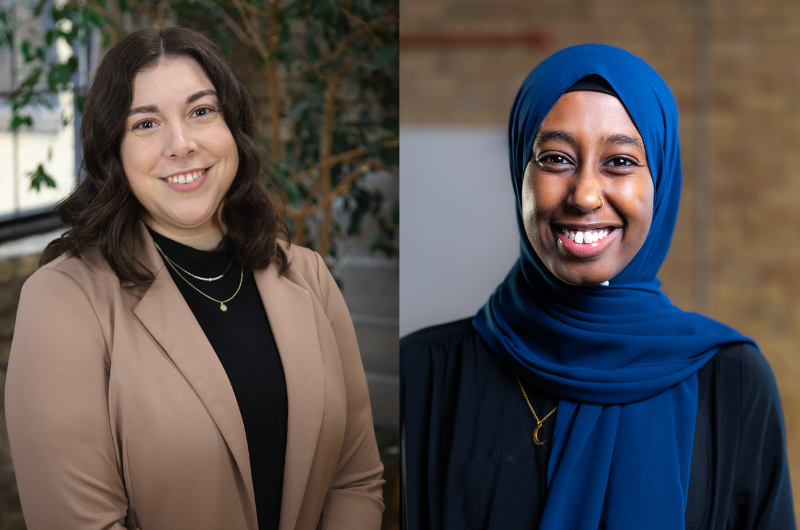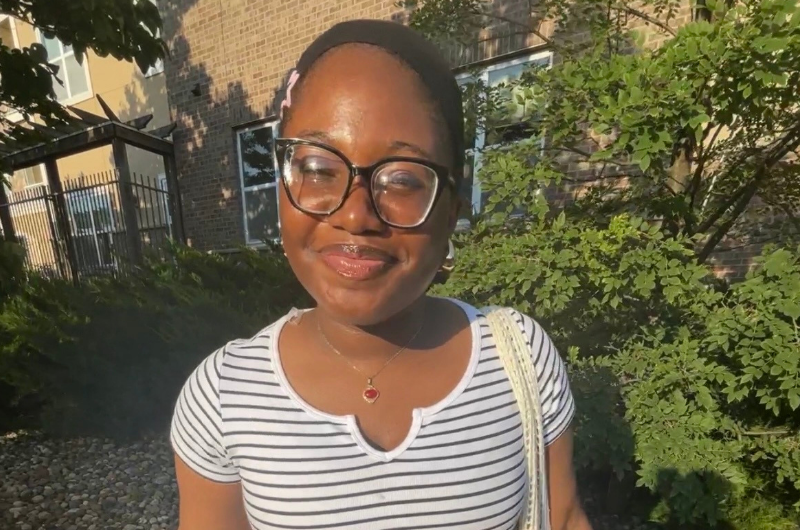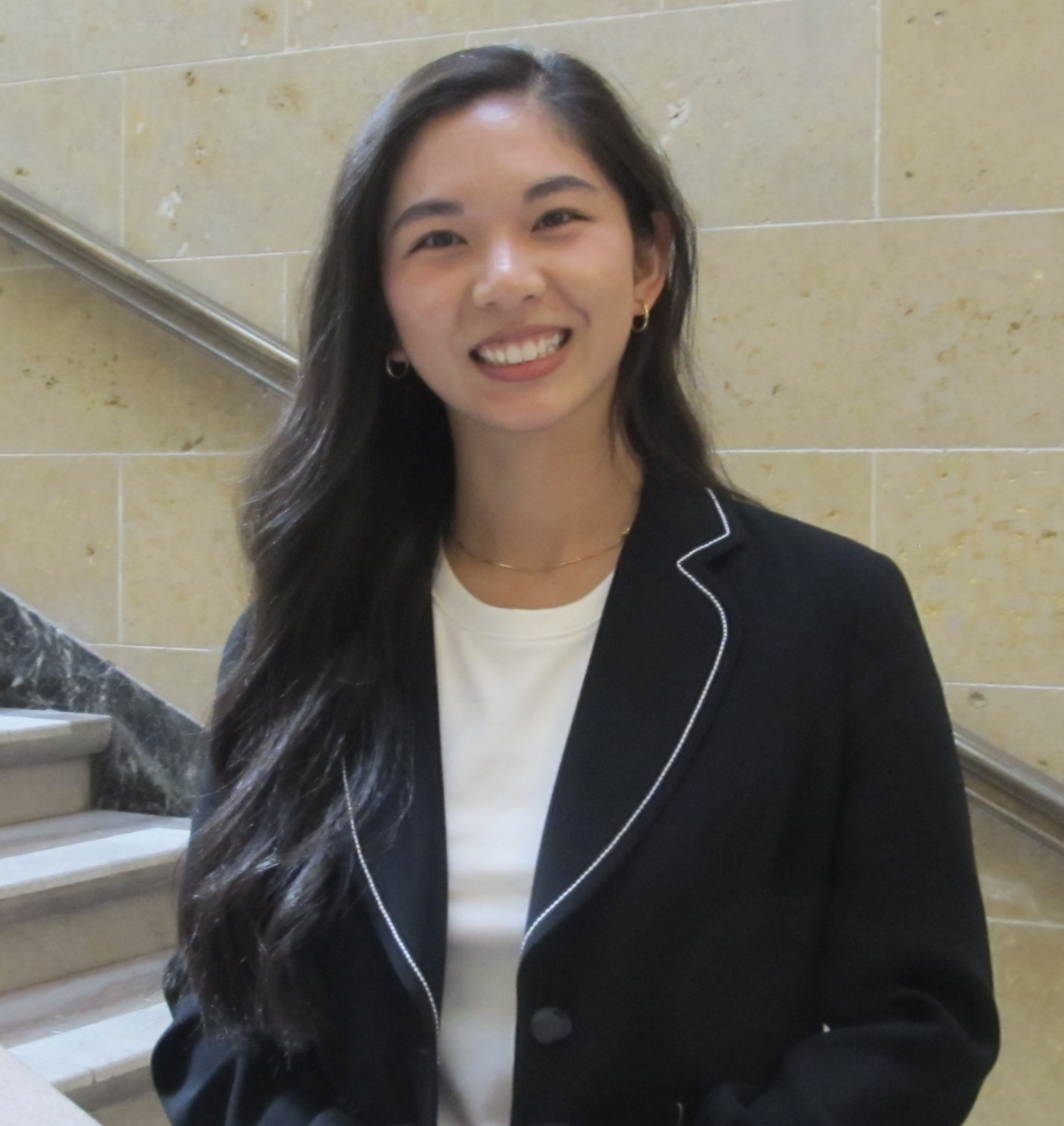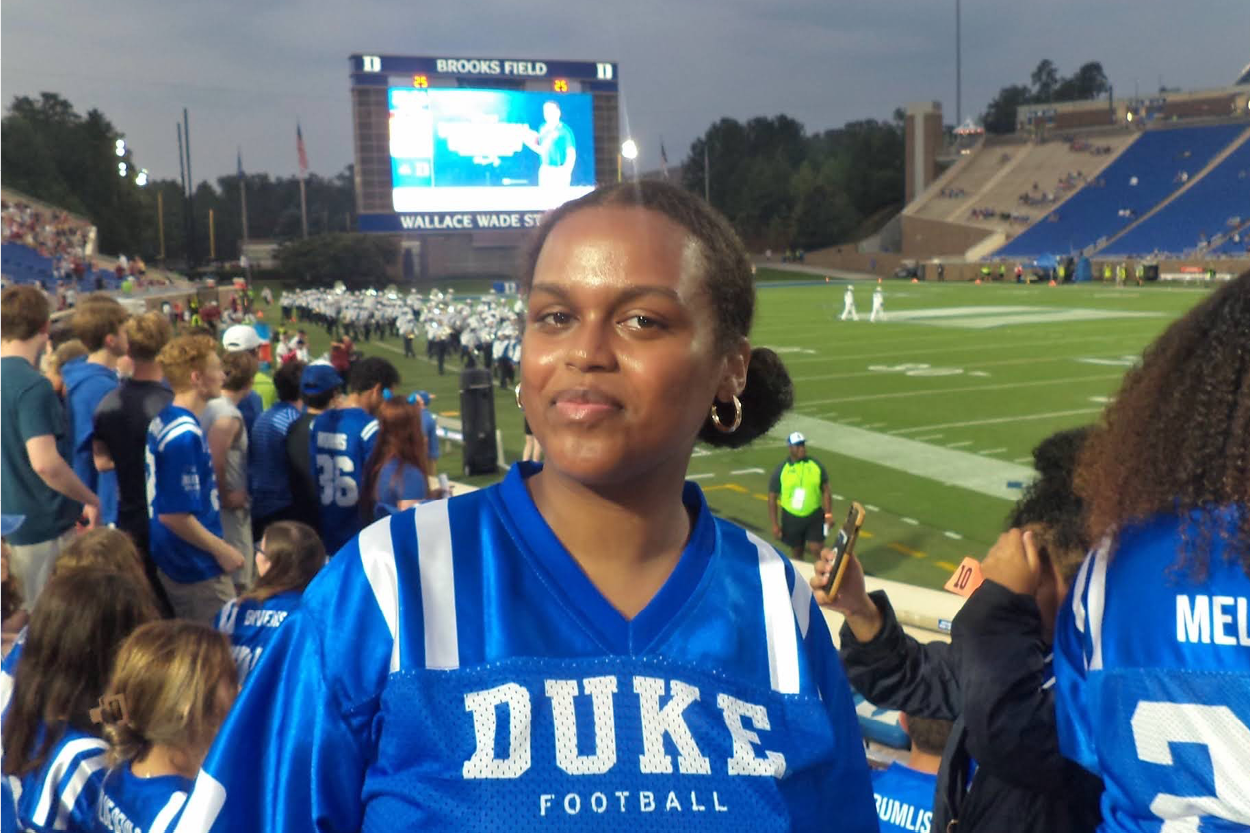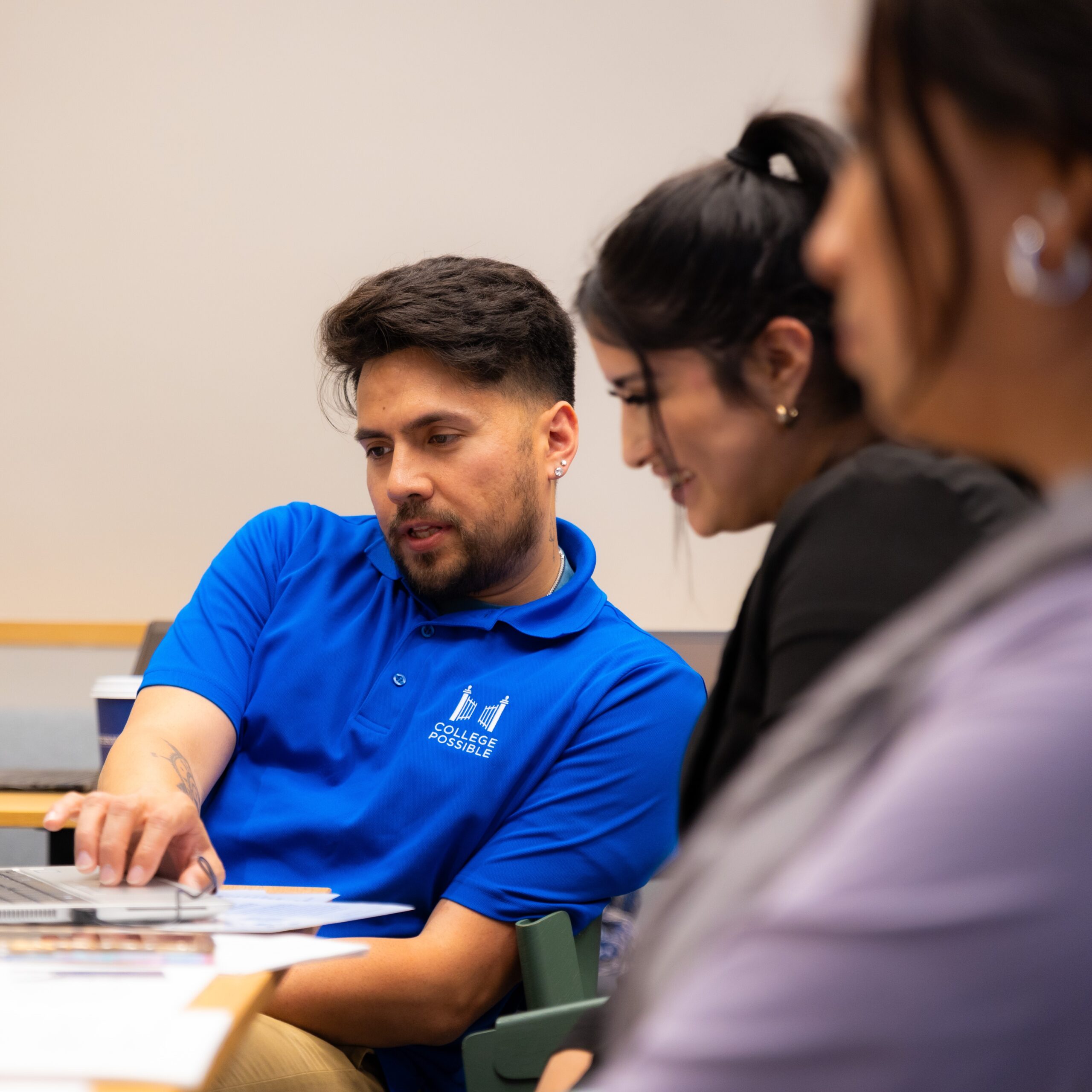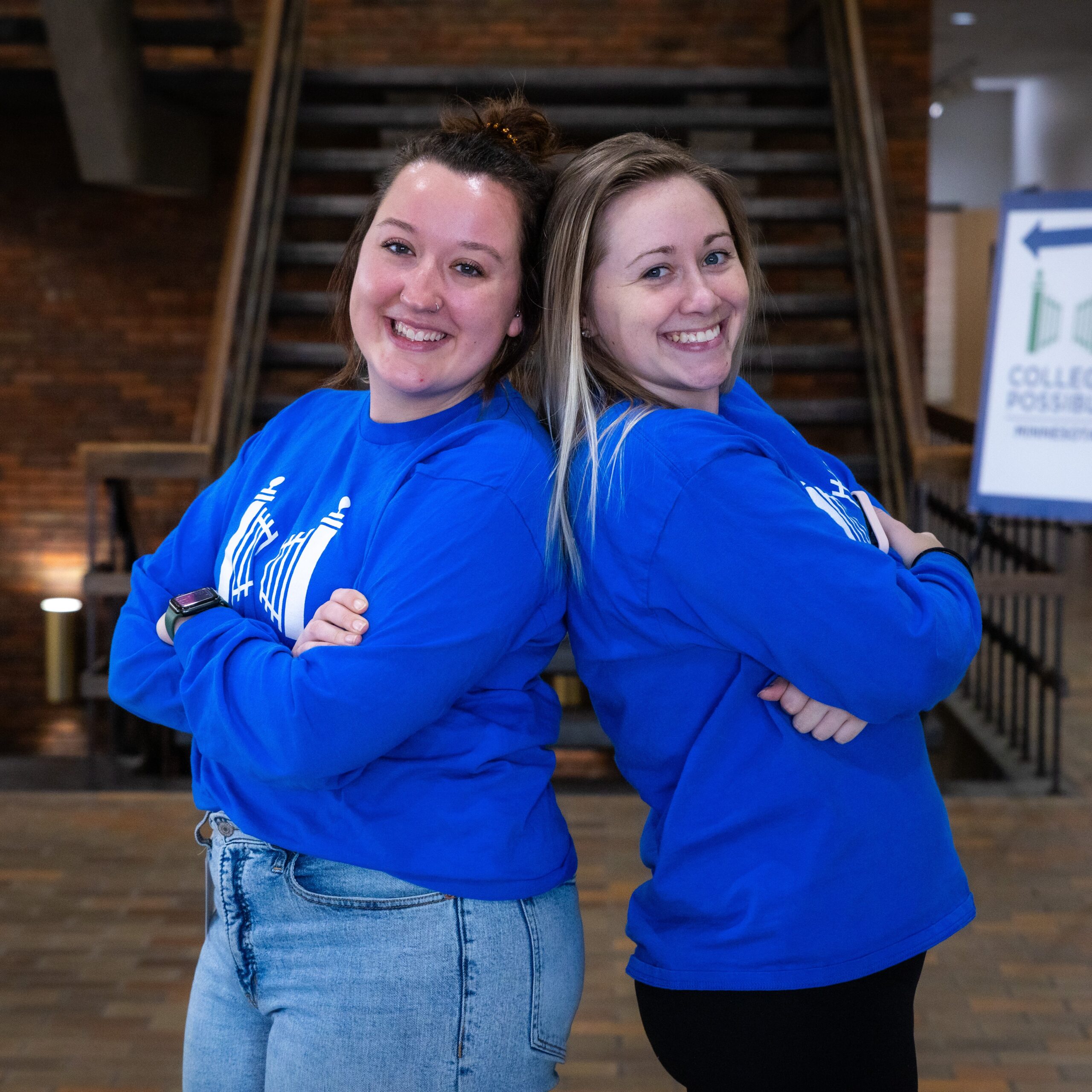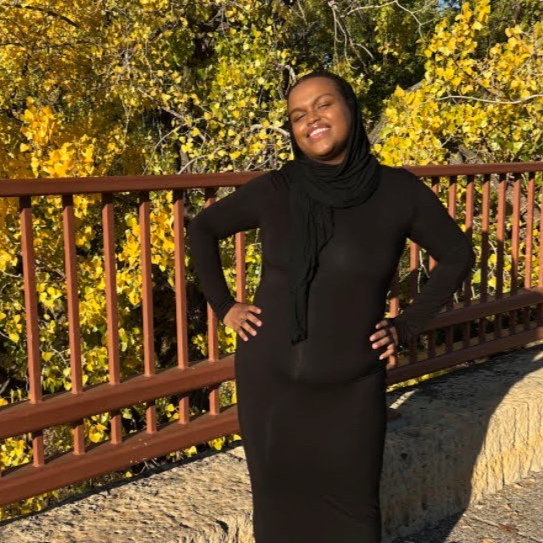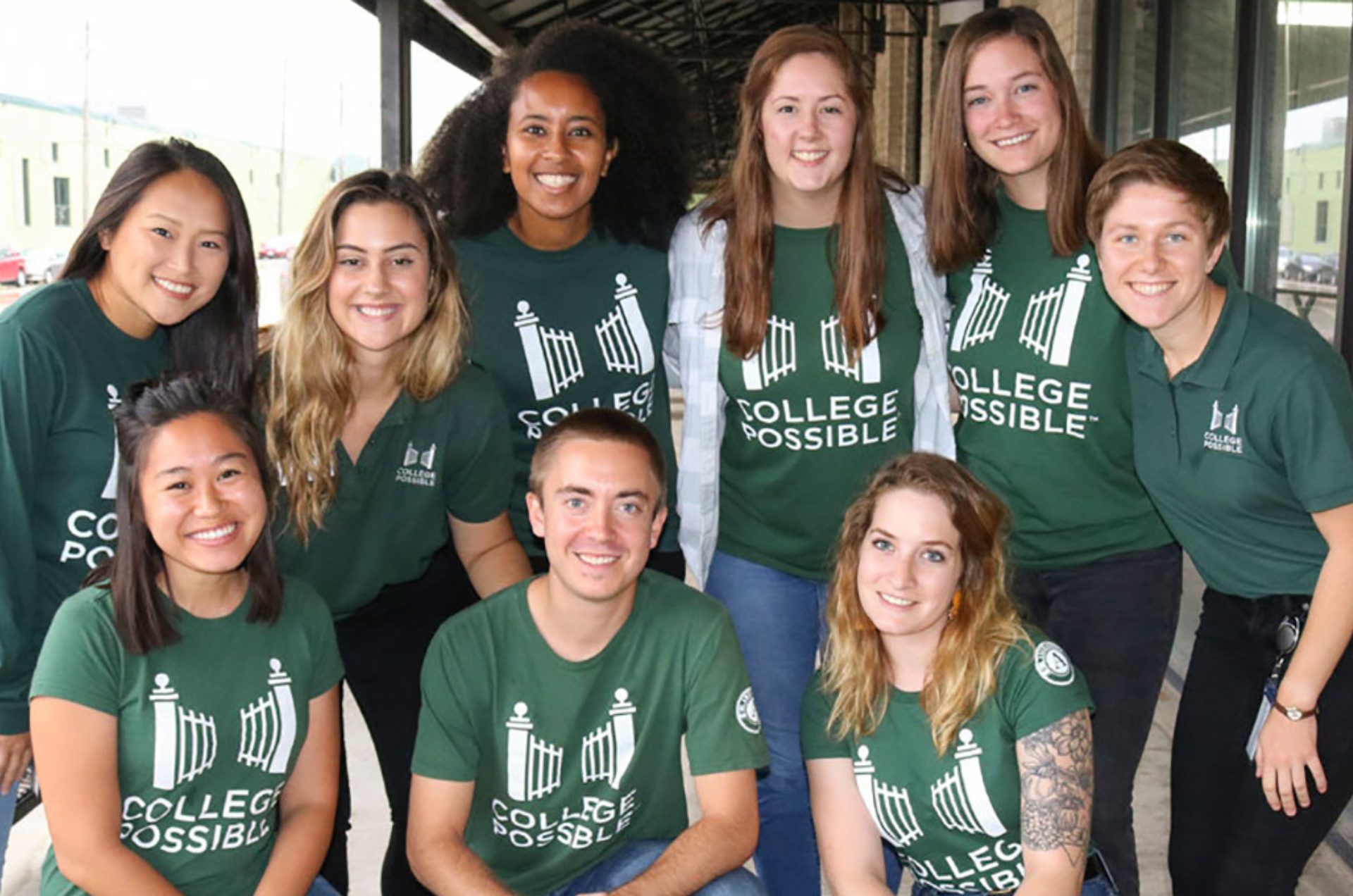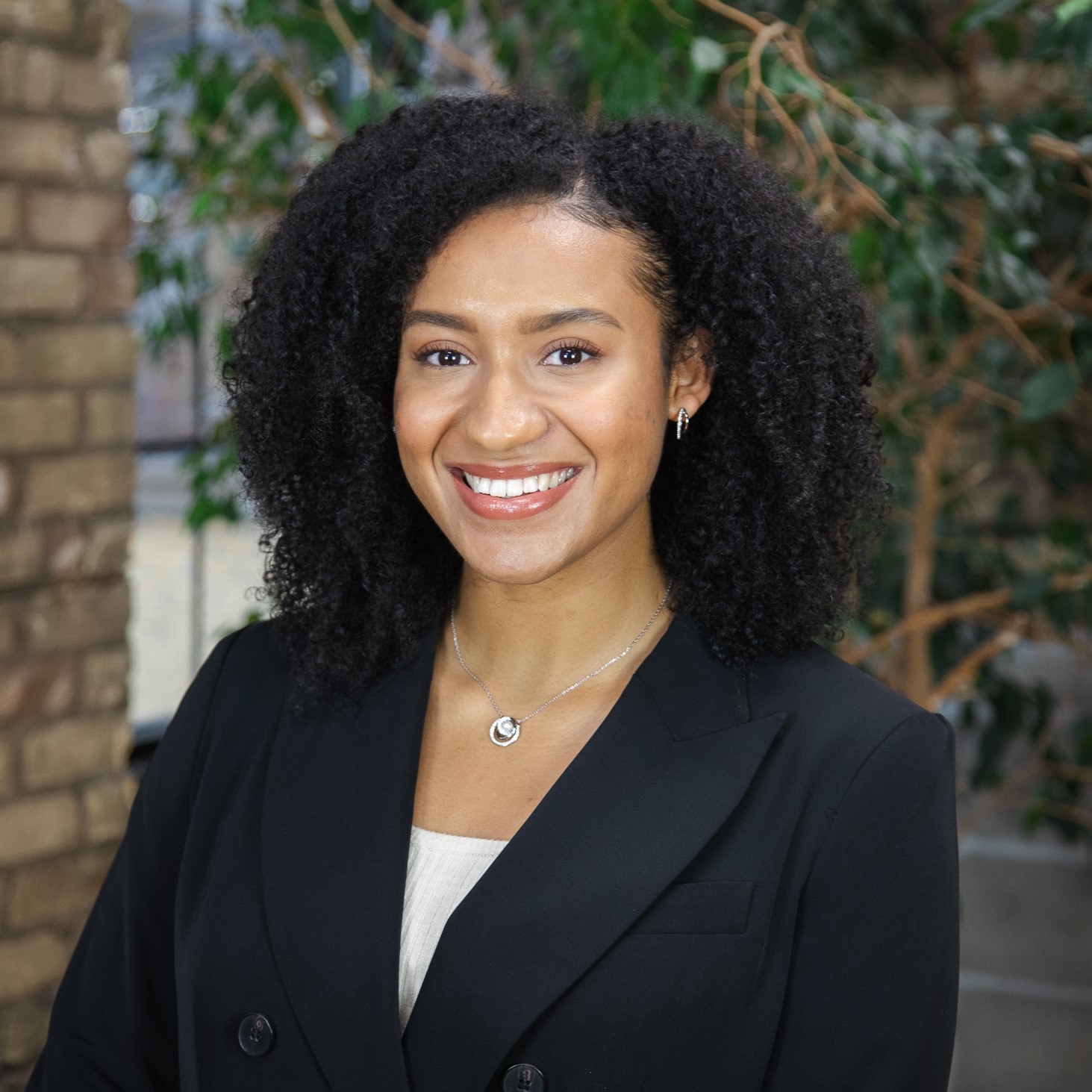
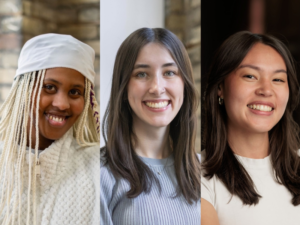
Stepping into the role of an AmeriCorps coach with College Possible Minnesota is less of a job and more of a transformative journey. For two first-year AmeriCorps coaches—Hanna Lee and Abby Quade—and one returning coach, Sabrin Al-Nur, working with College Possible Minnesota students has proven to be a rewarding and educational experience.
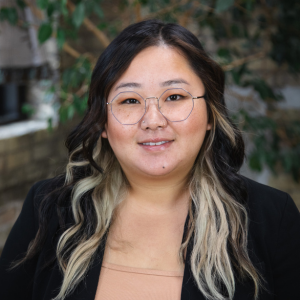
For first-year coach Hanna, the experience is personalized and intimate. As an alum of Champlin Park High School, returning to her alma mater creates a unique dynamic. That familiarity makes relationship-building more natural, especially when, “finding something you have in common … is an easy way to bond.” Hanna finds herself lucky to have strong relationships with students and “engaged, outgoing students who have already done a lot of the legwork.”
For AmeriCorps coach Sabrin, the journey is rooted in service and contributing to a greater, altruistic cause. Entering the role after time away from structured work, she describes becoming a coach as “a service mindset … giving back to my community.” Her approach to students is grounded in authenticity: “Be human. Ask them [students] about themselves … show up and be consistent.” Through this lens, coaching becomes less about instruction and more about building trust and rapport.
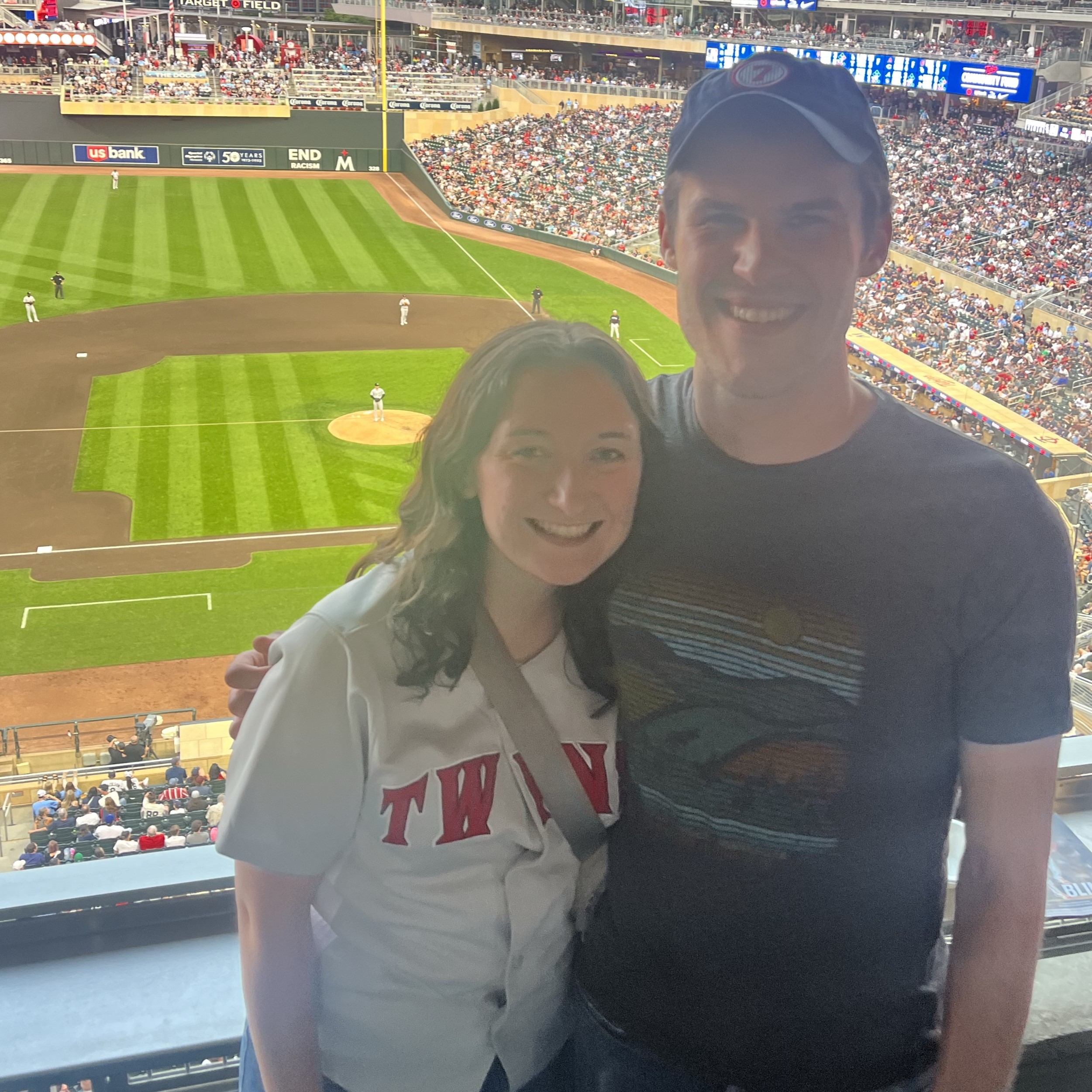
First-year coach Abby highlights the balance between structure and connection. At Washburn High School, she values both the curriculum and the relationships she builds. “I really enjoy the process of building relationships with my students over time,” she shares. Still, the role challenged her initial assumptions. Abby notes that as coaches, “We aren’t meant to be friends with our students, but rather a trusting presence and authority figure instead.”
Across all three experiences, coaching reveals challenging realities about the educational system. Hanna admits it “highlights the gaps,” especially around school attendance and college affordability. Abby echoes this, recognizing “how much privilege I had growing up.” Sabrin notes the role, “Opened my eyes to its flaws, but also deepened my sense of appreciation for the education I received in Minnesota.”
Some first-year coaches recall their initial assumptions and viewpoints on coaching as challenges to overcome rather than frameworks to work through. Sabrin calls coaching “a lot of time and effort … an act of altruism,” and Abby reflects on early missteps, admitting she sometimes prioritized “curriculum over empathy.” Yet, the rewards endure. Hanna hopes one day her students will say, “I’m so glad I had someone help me,” while Abby cherishes being seen as, “the type of person who doesn’t let you give up on yourself.” In the end, being an AmeriCorps coach isn’t just about guiding students; it’s about growing alongside them.
Are you interested in making a positive impact in student’s lives and learning more about a year of service? Apply to be an AmeriCorps coach.